
Dear DPS members, welcome to the Dutch Petrophysical Society Fall Meeting!
This meeting will take place on Tuesday 15th September and is distinguished by a change of venue. We are kindly being hosted by EBN BV at their head office in Utrecht (at Daalsesingel 1). The location is shown below. Doors open at 15:30 and the meeting will commence at 16:00.
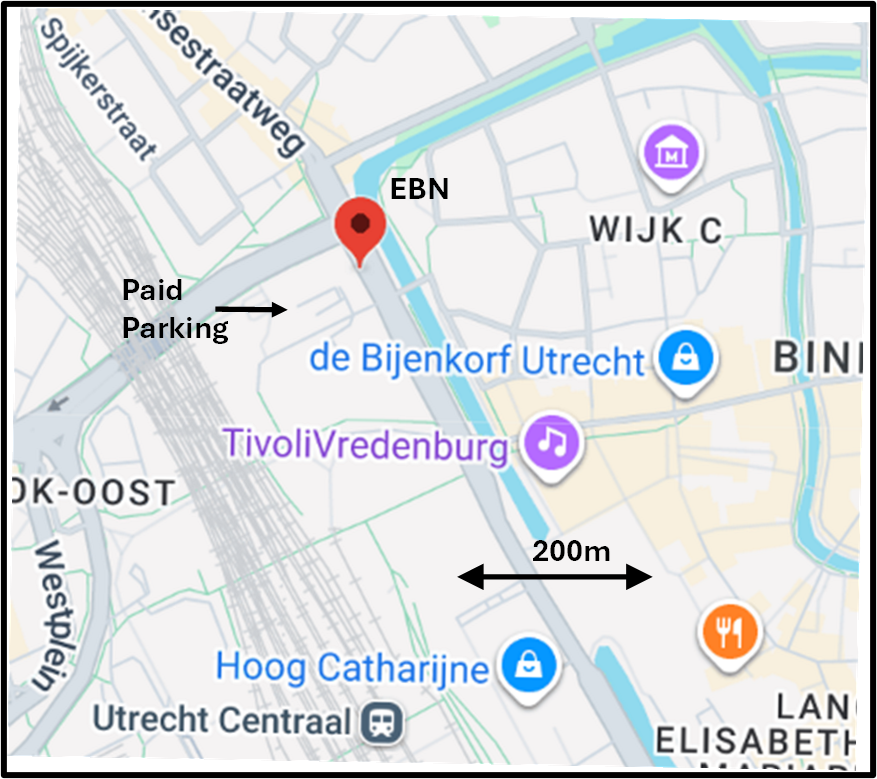
The EBN office is most conveniently reached by train, but paid parking is available across the street. Preregistration of attendance (at least 24 hours notice) is required by EBN, via the link distributed by E-mail.
The theme of the meeting is petrophysical determination of reservoir quality and heterogeneity, encompassing both hydrocarbon and geothermal reservoirs.
Talk 1: “Reservoir heterogeneity and its impact on reservoir productivity.” Danijela Krizanic, Senior Petrophysicist Sproule-ERCE.
Abstract:
Reservoir heterogeneity is often inadequately addressed within standard evaluation workflows. When overlooked, it can lead to either overestimation or underestimation of critical reservoir properties, particularly permeability and well productivity. The talk will focus on practical methods of defining heterogeneity and implications on accurate reservoir productivity assessment.
Speaker Bio:
Danijela Krizanic is a Senior Petrophysicist with 25 years of experience. She held various roles with consultancies, service companies and operators. During her career she participated in diverse projects across the whole energy sector; from oil and gas, carbon storage to geothermal. Her technical expertise covers field operations, complex subsurface characterization studies, reserves evaluation, projects review and technical due diligence.
Talk 2: “Quantifying Porosity, Permeability and Reservoir Quality in Geothermal Wells Using a New High Efficiency Nuclear Magnetic Resonance Logging Methodology.” Tom Bradley, Global SME, Baker Hughes.
Abstract:
Geothermal energy is growing in importance as a clean renewable energy source. Hence, the industry desires to quantify key formation properties. As financial returns in geothermal are considerably lower than in oil and gas, many commonly accepted oil and gas methodologies (including extensive downhole data acquisition) are not economically feasible.
Of key interest is if the formation will flow, from where, and at what rate. This is directly related to the amount of heat that can be produced and hence the economic return of a well. This is commonly quantified by well tests, however a well test will not give detailed information of what intervals are flowing, therefore a more detailed method of identifying flowing intervals is of significant interest to the industry.
Nuclear magnetic resonance (NMR) logging is an accepted method of estimating permeability from fractional porosity measurements, and hence to identify potential flowing intervals. With further benefits of not requiring a nuclear source, so has intrinsically lower HSE risks than other methods. However, NMR has historically been seen as a ‘slow’ log, and as a result is unattractive to geothermal operators because of increased rig time costs.
As the slow logging speed is controlled by the slowest polarising fluid phase in the formation (commonly the hydrocarbons), long wait times are needed in NMR logging to polarise all fluid phases, resulting in slow logging speeds. It was theorised that in geothermal formations where no slow polarising hydrocarbons are present, wait times can be reduced significantly, and therefore logging speeds can be increased by an order of magnitude whilst still providing data equivalent to standard methodologies, hence making NMR logging considerably more attractive to geothermal operators. The validity of the above hypothesis was tested and was supported by comparing standard and high-speed NMR logging passes in a geothermal formation drilled with oil-based mud.
Speaker Bio:
Tom Bradley is an Associate Fellow with Baker Hughes, and a global subject matter expert for open hole formation evaluation, including nuclear magnetic resonance interpretation. He started his career in 1997 with Western Atlas International, and since 2005 has been based in Den Helder in the Netherlands. As part of his role, one of his key interests is the application oil and gas formation evaluation methodologies to geothermal formation evaluation.
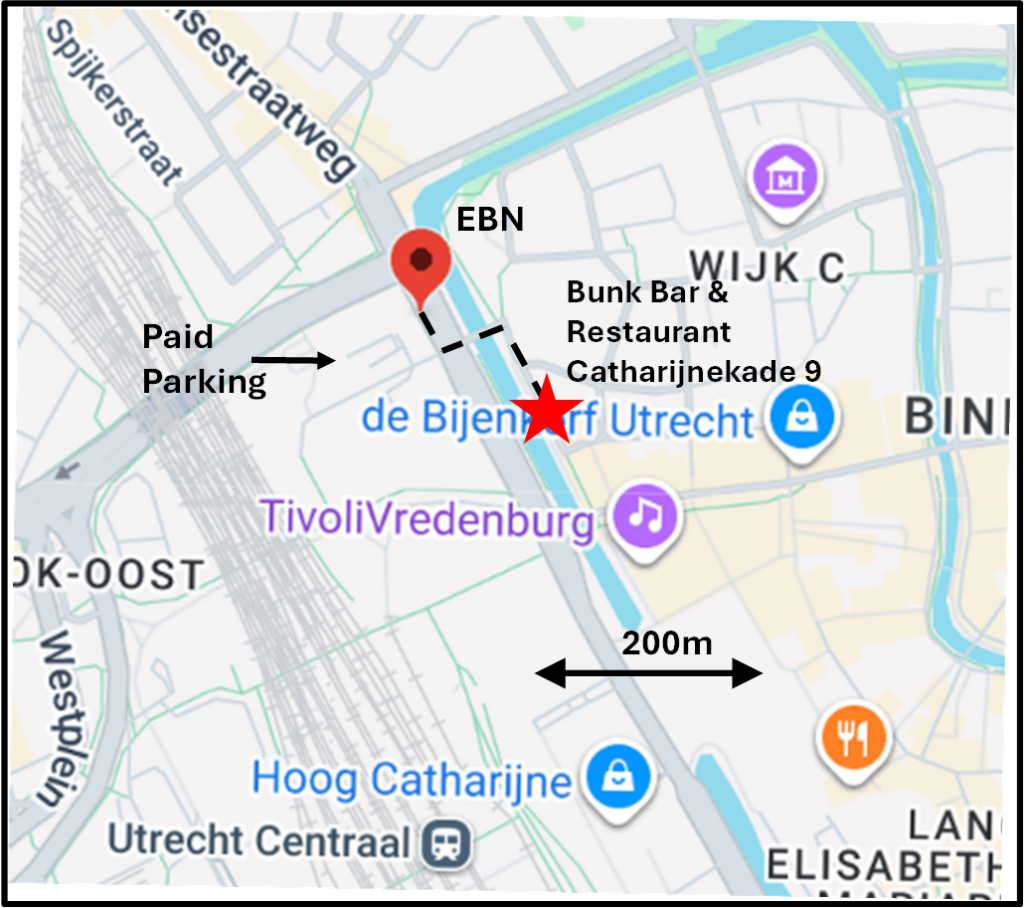
After the meeting there will be a social gathering around the corner at Bunk Restaurant and Bar, Catharijnekade 9.

We look forward to seeing you at the meeting,
DPS Board